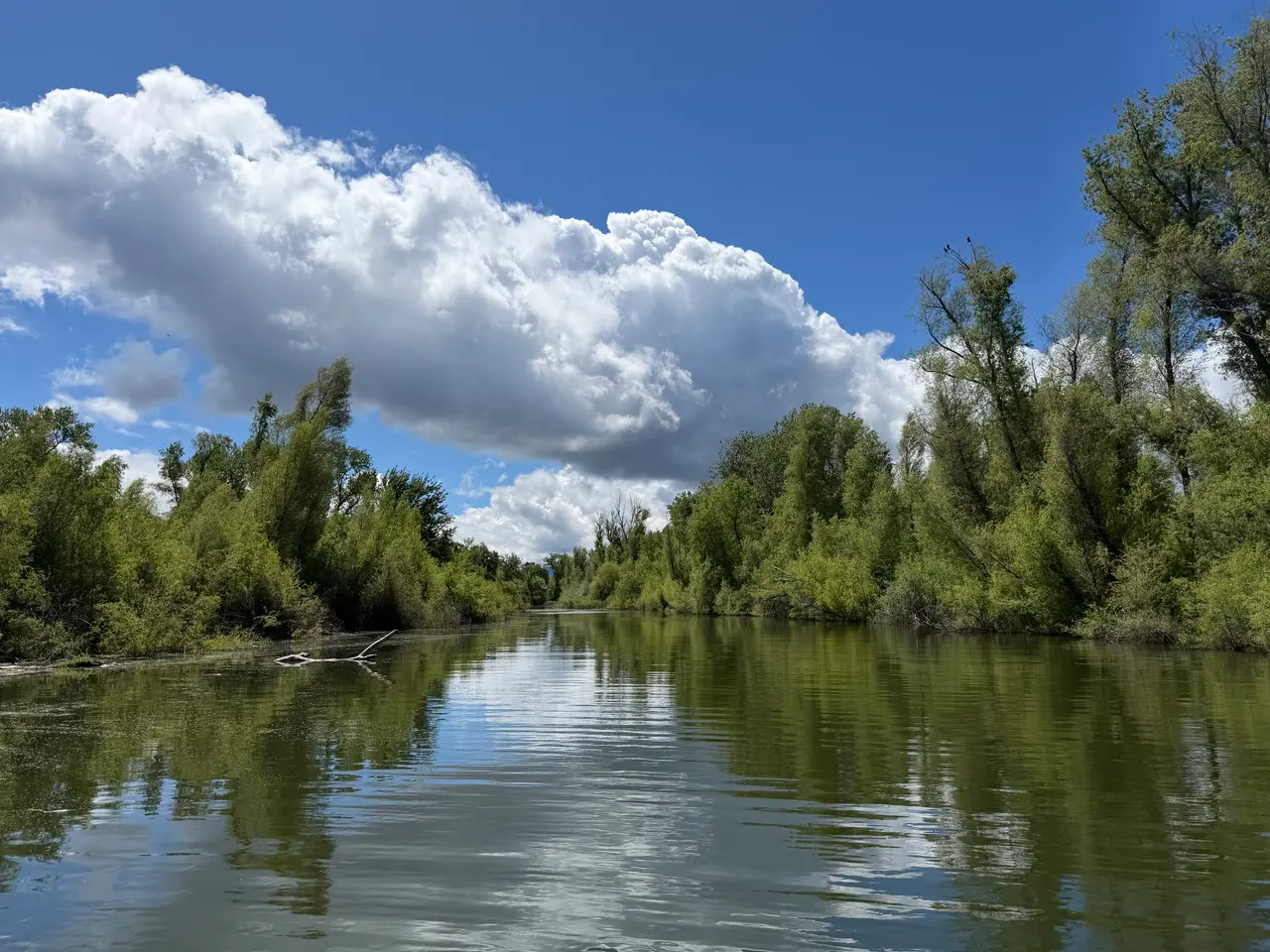
Protecting the Clear Lake Hitch for Future Generations
The Clear Lake Hitch lives in this one California lake and nowhere else on Earth. Its numbers have fallen about 96% since 2017, and in 2023 Lake County declared a local state of emergency over the risk of losing it. This site gathers the surveys, the live lake data, and the record of what is happening.
- 35
- Fish species documented
- 4
- Native species extinct or extirpated
- 20
- Introduced species
- 2014
- Year listed as threatened in California
Species counts are drawn from the Clear Lake fish list in the Fish Guide, consistent with the fish-community review in Thompson et al. 2013 (California Fish and Game 99(1):7–41).
Clear Lake Hitch: Spawner Count by Year
Source: CDFW and Lake County Water Resources visual spawner surveys (adult hitch counted in tributaries), 2013 through the 2025 season, distinct from the USGS gillnet relative-abundance index behind the 96% decline figure. Recent-year totals are CDFW lake-wide figures that combine survey programs and can differ from any single program's raw tributary counts. Source archive · USGS OFR 2025-1018 · Full timeline
| Year | Spawners (lake-wide) |
|---|---|
| 2013 | Fewer than 500 |
| 2014 | 1,119 |
| 2016 | 693 |
| 2017 | 517 |
| 2018 | 1,153 |
| 2019 | 612 |
| 2020 | 1,672 |
| 2021 | 120 |
| 2022 | 306 |
| 2023 | 2,548 |
| 2024 | 1,042 |
| 2025 | 1,567 |
California's Rarest Minnow
The Clear Lake hitch (Lavinia exilicauda chi) is a subspecies of minnow found only in Clear Lake, Lake County, California, the largest natural freshwater lake entirely within California, and one of the oldest lakes in North America at nearly 500,000 years old. It is found nowhere else on Earth, and it's disappearing.
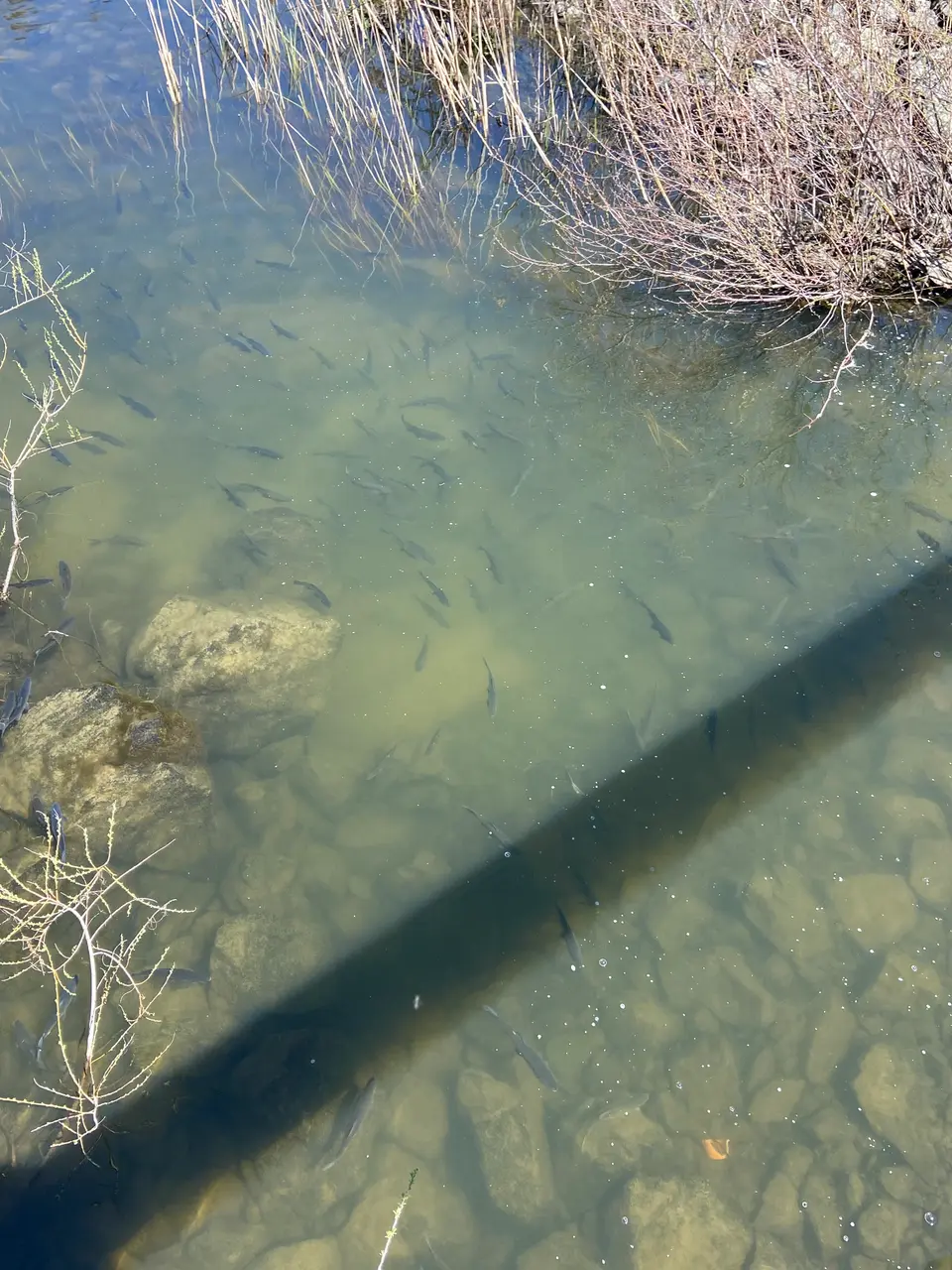
Each spring, adult hitch migrate from the lake into its tributaries to spawn, a spectacle that has sustained the Indigenous Pomo Tribes as a food and cultural resource since time immemorial. The Pomo people know this fish as chi. Tribal communities have long held deep spiritual and practical connections to this fish and the watershed that sustains it.
Today, the Clear Lake hitch faces mounting threats: prolonged drought, loss of spawning habitat, harmful algal blooms, competition and predation from invasive species, and reduced water flows in tributaries. In February 2023, Lake County declared a local state of emergency due to the risk of extinction. As of January 2025, the U.S. Fish & Wildlife Service has proposed listing the hitch as threatened under the Federal Endangered Species Act.
Biology
Lives up to 6 years · Grows to ~350mm · Spawns each spring in lake tributaries · Feeds almost primarily on Daphnia (water fleas), supplemented by algae, zooplankton, and insects.
Cultural Significance
A subsistence resource for the Pomo Tribes since time immemorial. The spring spawning runs were major seasonal events, central to both food and ceremony.
CA Endangered Species Act: Listed Threatened (2014)
The California Department of Fish and Wildlife has protected the CLH as threatened since 2014, restricting take and mandating conservation efforts.
Federal ESA Listing Proposed: January 2025
The U.S. Fish & Wildlife Service has proposed listing the CLH as threatened under federal law, which would add Endangered Species Act protections on top of the state's.
Lake County Watershed Protection District
Conducts annual spawner surveys, community science programs, and collaborates with Tribes, state and federal agencies on habitat restoration and population research.
Live Conditions & Spawner Map
These gauges read live from USGS. When the lake drops and the creeks stop flowing, as in 2021, the hitch can't reach their spawning grounds and the run collapses. Here is where things stand now.
Lakeport pier
EPA Monitoring
Interactive Tributary Map
Each dot is a creek the hitch spawn in. Kelsey and Adobe still carry most of the run; click any creek for its survey history and conditions.
The Clear Lake watershed at a glance
The hitch spawn in some 27 creeks around Clear Lake, but a handful, Kelsey and Adobe above all, carry most of the run. Each dot marks where a priority creek meets the lake, colored by its recent spawning status. Tap any creek for its profile, or open the full interactive map.
Priority tributaries by shore
North shore
- Scotts Creek — Active spawning
- Morrison Creek — Survey site
West shore
- Forbes Creek — Active spawning
East shore
- Burns Valley — Active spawning
- Seigler System — Concern
South shore
- Manning Creek — Active spawning
- Adobe Creek — Active spawning
- Kelsey Creek — Active spawning
- Cole Creek — Restoration
Fishes of Clear Lake
All 35 documented fish species of Clear Lake (native, introduced, and those lost) plus 4 failed introductions. Click any card for detailed information.
Unsuccessful Introductions
These were stocked in Clear Lake and never took hold. The lake's warm, shallow, algae-rich water doesn't suit every fish.
Threats & Conservation
Clear Lake faces a convergence of environmental pressures, and an equally broad coalition working to reverse them.
Harmful Algal Blooms (HABs)
Clear Lake experiences severe annual cyanobacterial blooms that produce toxins dangerous to fish, wildlife, pets, and humans. Blooms reduce oxygen, block sunlight, and devastate aquatic food webs, directly impacting juvenile hitch survival.
Invasive Species
Non-native species like common carp, goldfish, largemouth bass, and others compete with and predate on native fish. Carp and goldfish disturb sediments, uproot vegetation, and consume hitch eggs, contributing directly to recruitment failure each spawning season.
Drought & Habitat Loss
Persistent drought has reduced tributary flows, leaving hitch stranded or preventing migration entirely. Riparian vegetation loss, channel degradation, and agricultural diversions further reduce viable spawning habitat year over year.
Water Quality & Warming
Rising temperatures, elevated nutrient loads from agricultural runoff, and legacy contamination from historic mercury mining combine to stress fish populations and accelerate harmful algal bloom frequency and severity throughout the year.
Watershed Development
Land use changes increase runoff, sedimentation, and nutrient input. Road crossings and diversions in tributary streams act as physical barriers to hitch spawning migration.
What's being done
- Annual visual spawner surveys: CDFW, Robinson Rancheria, Habematolel Pomo of Upper Lake, Big Valley Rancheria, LCWPD, and community scientists
- Hitch tagging study: Habematolel Pomo of Upper Lake monitors migration patterns
- Carp & goldfish removal: CDFW, Robinson Rancheria and Rojas Fisheries
- CDFW in-lake mark-recapture survey
- USGS gillnet surveys: abundance and distribution since 2017
- Hitch Rescue Team: responds to stranded hitch reports
Help Protect the Hitch
There are a few ways to help, and none of them need a permit or a science degree. The most useful for most people is simple: watch a creek during the spring run and report what you see.
Become a Community Scientist
Report Clear Lake hitch sightings during the spring spawning season (March to May). Your observations directly support the long-term population record — share one using the form below.
Report a sighting ↓Official county volunteer programGet a Free Hitch Sticker
Pick up your free Clear Lake hitch sticker at the Lake County Water Resources front office in Lakeport. Spread awareness in your community.
255 N. Forbes St., Room 309Report Stranded Hitch
If you spot hitch stranded in a dry or disconnected tributary, call immediately. The Hitch Rescue Team responds and relocates fish to safe water. Quick action saves lives.
Call (707) 263-2344Permits are required to conduct fish rescues. Always contact the Rescue Team rather than attempting relocation yourself.Support Lake Rehabilitation
Multiple organizations are working to restore Clear Lake's health, from large-scale habitat projects to community shoreline stewardship.
Blue Ribbon Committee (AB 707)Report a hitch sighting
Saw hitch in a creek this spring? Share what you saw to support the community-science record. For a fish stranded in a drying creek, call the Hitch Rescue Team at (707) 263-2344 right away.
- 1Watch a tributaryMarch to May, when adult hitch run up the creeks to spawn.
- 2Note the detailsCreek, date, a rough count, and a photo if you can.
- 3Submit belowYour report adds to the community-science record.